Hidden in the ceiling
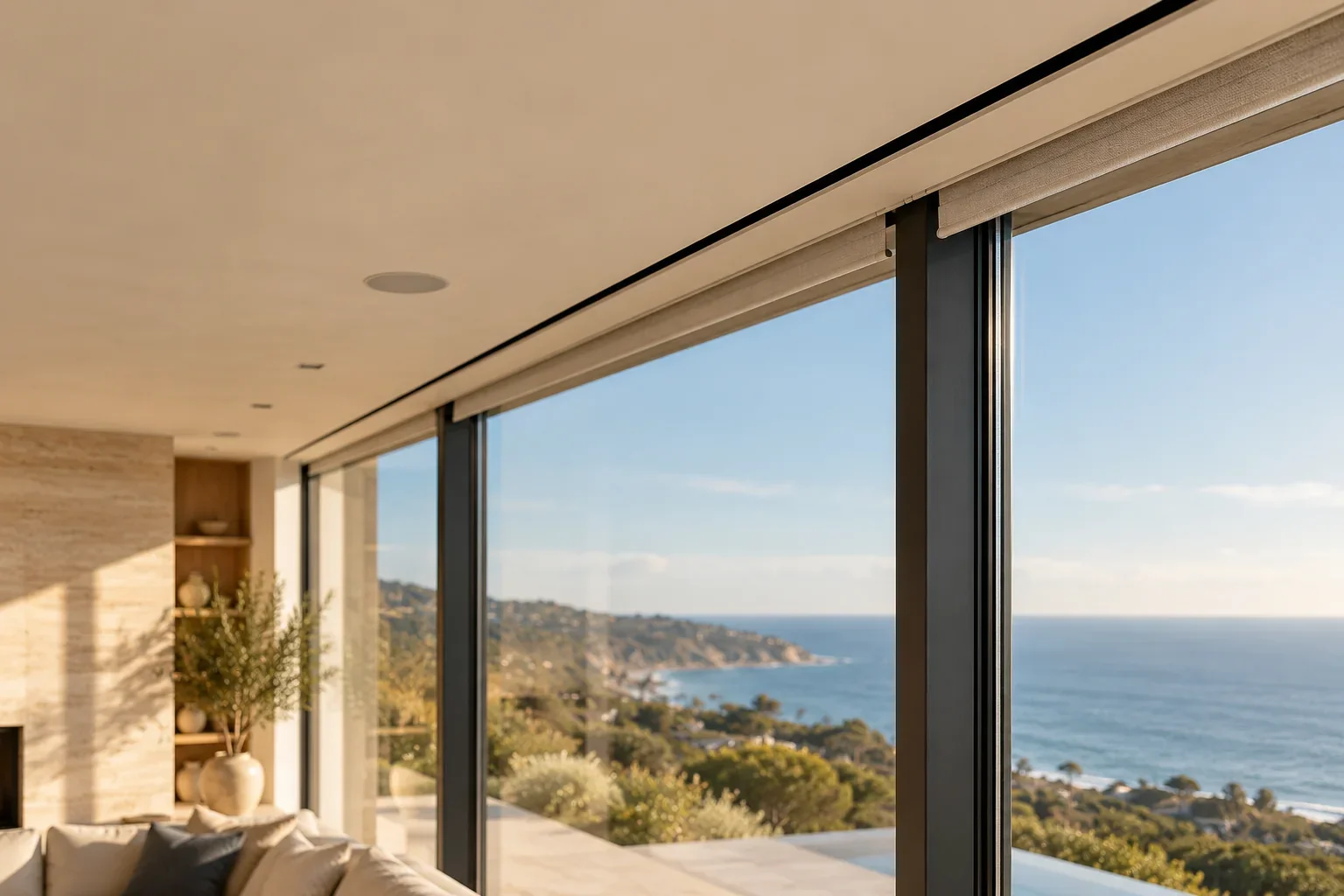
Shades roll away into slim pockets cut into the ceiling, so when they are up there is nothing at the window but glass and the view.
Silent motorised shades and curtains that follow the sun, protect the furniture and close for the night on their own, made in fabrics chosen with your designer.
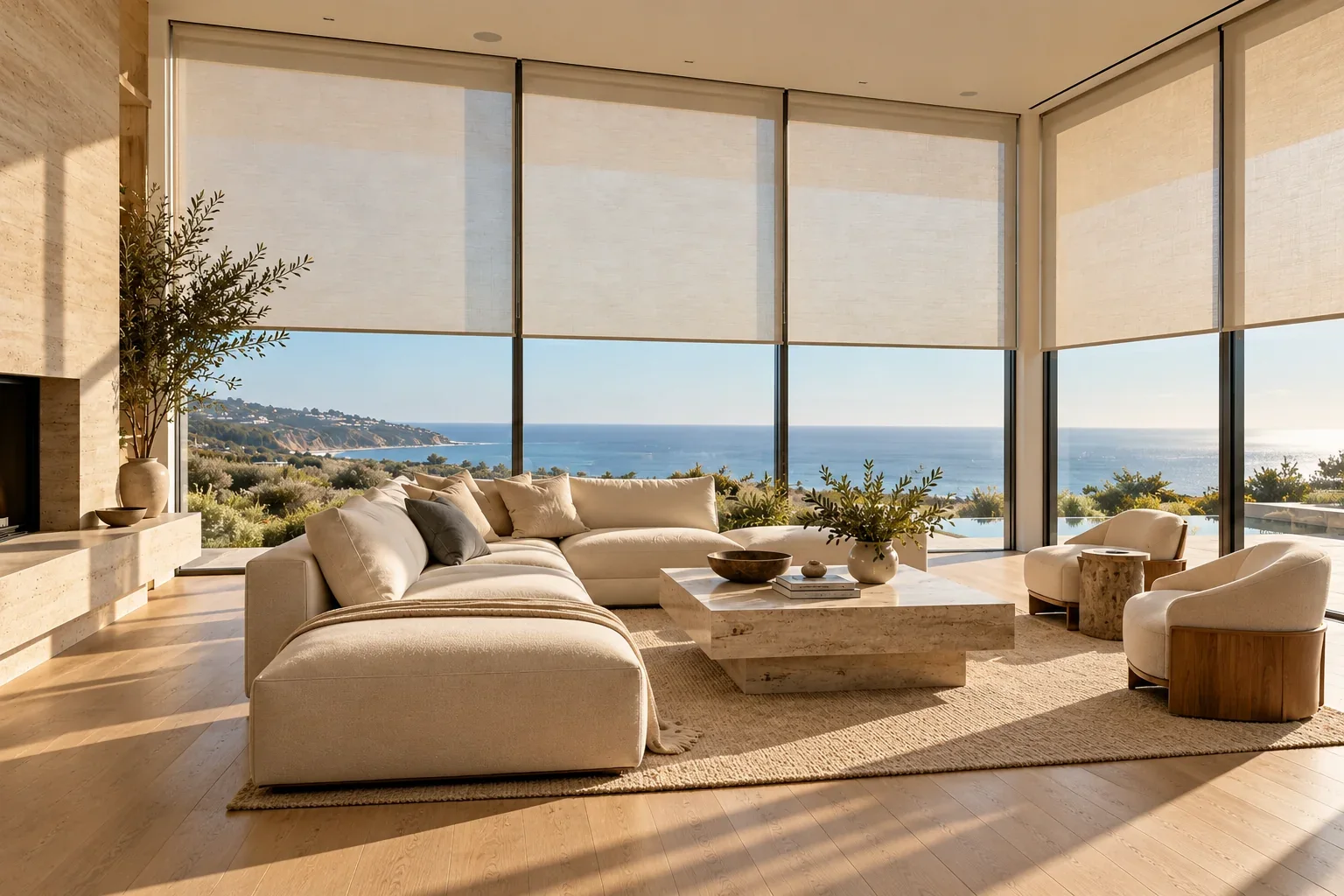
Big windows bring in the view, and with it glare on the screen, heat in the afternoon and rugs that fade by the summer. Most houses answer it with blinds nobody remembers to touch.
We hide quiet motors in the ceiling, choose fabrics with your designer and set each shade to follow the sun round the house. Rooms stay bright and cool without anyone getting up, and at night every window closes with one press.
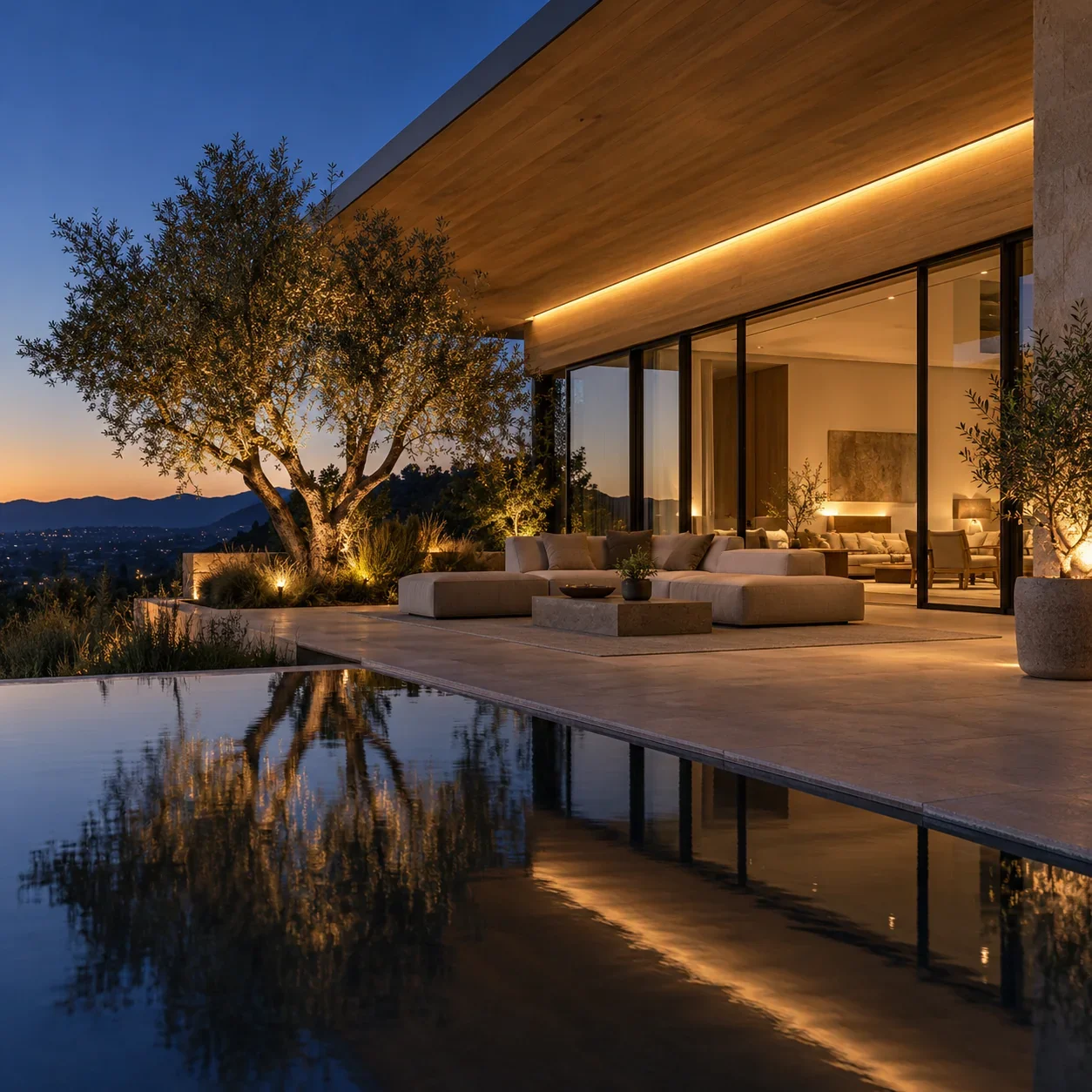
Four details that make shades part of the architecture.
Shades roll away into slim pockets cut into the ceiling, so when they are up there is nothing at the window but glass and the view.
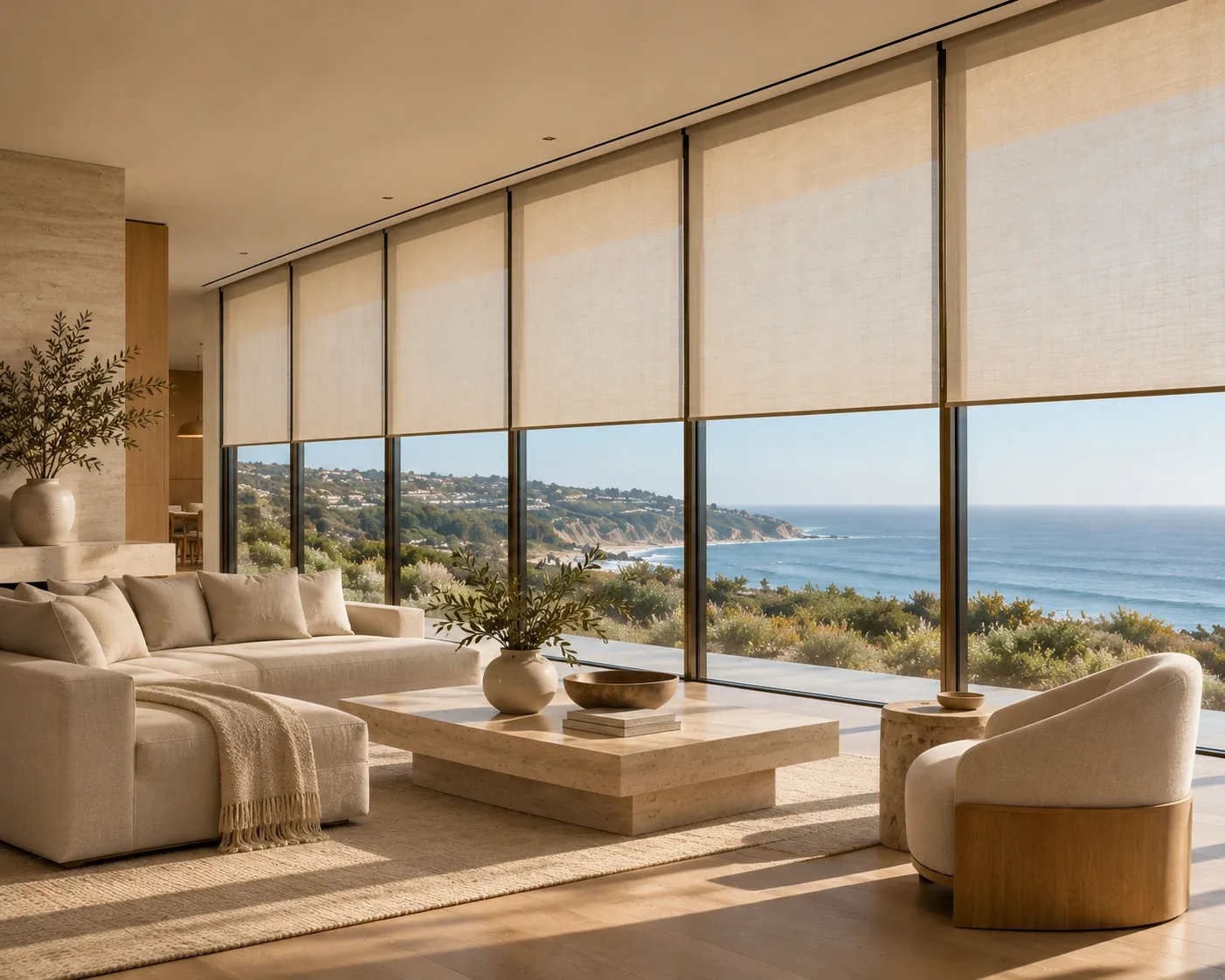
Whisper-quiet motors move every shade in a room together and stop them level to the millimetre, so a long run of windows always looks composed.
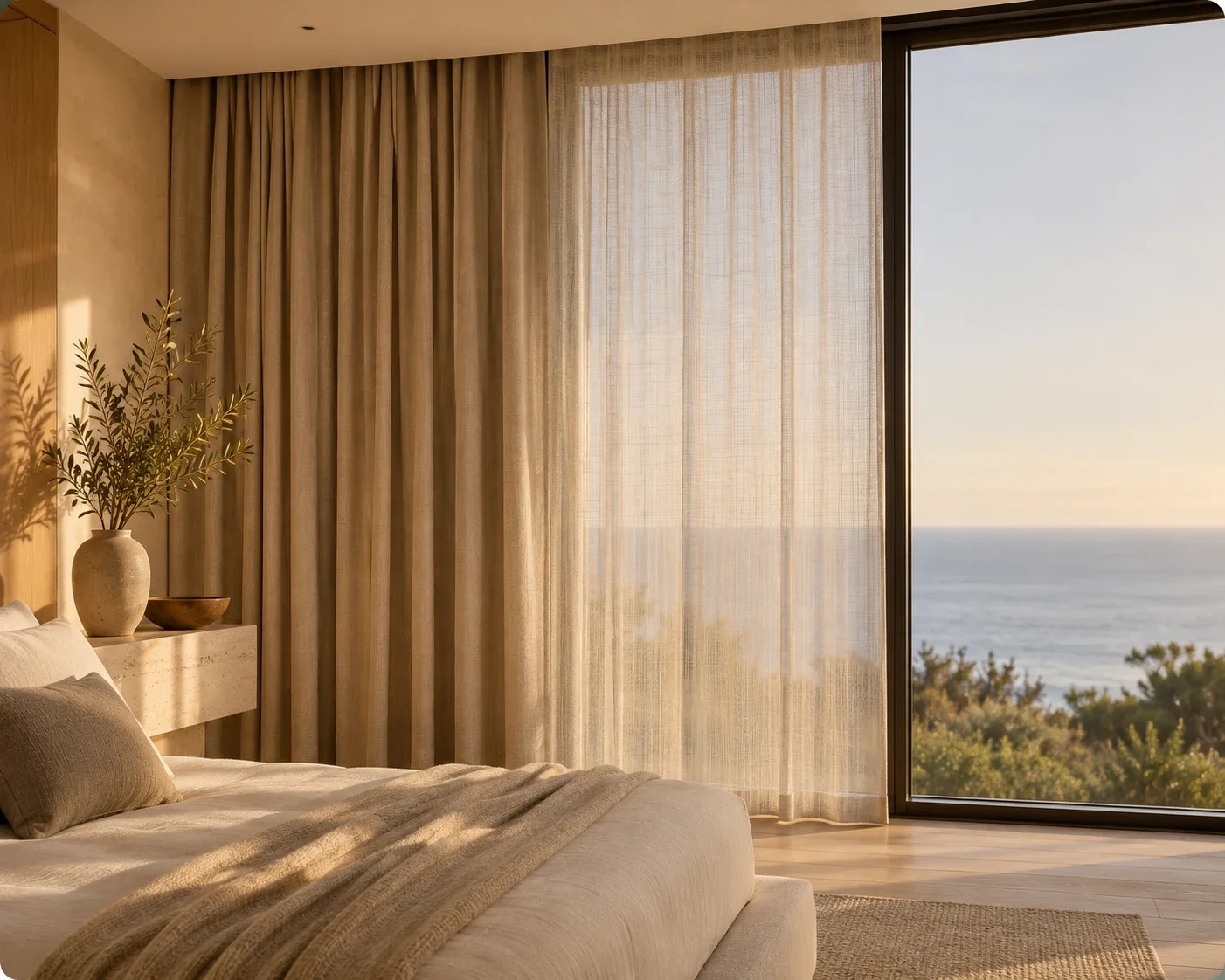
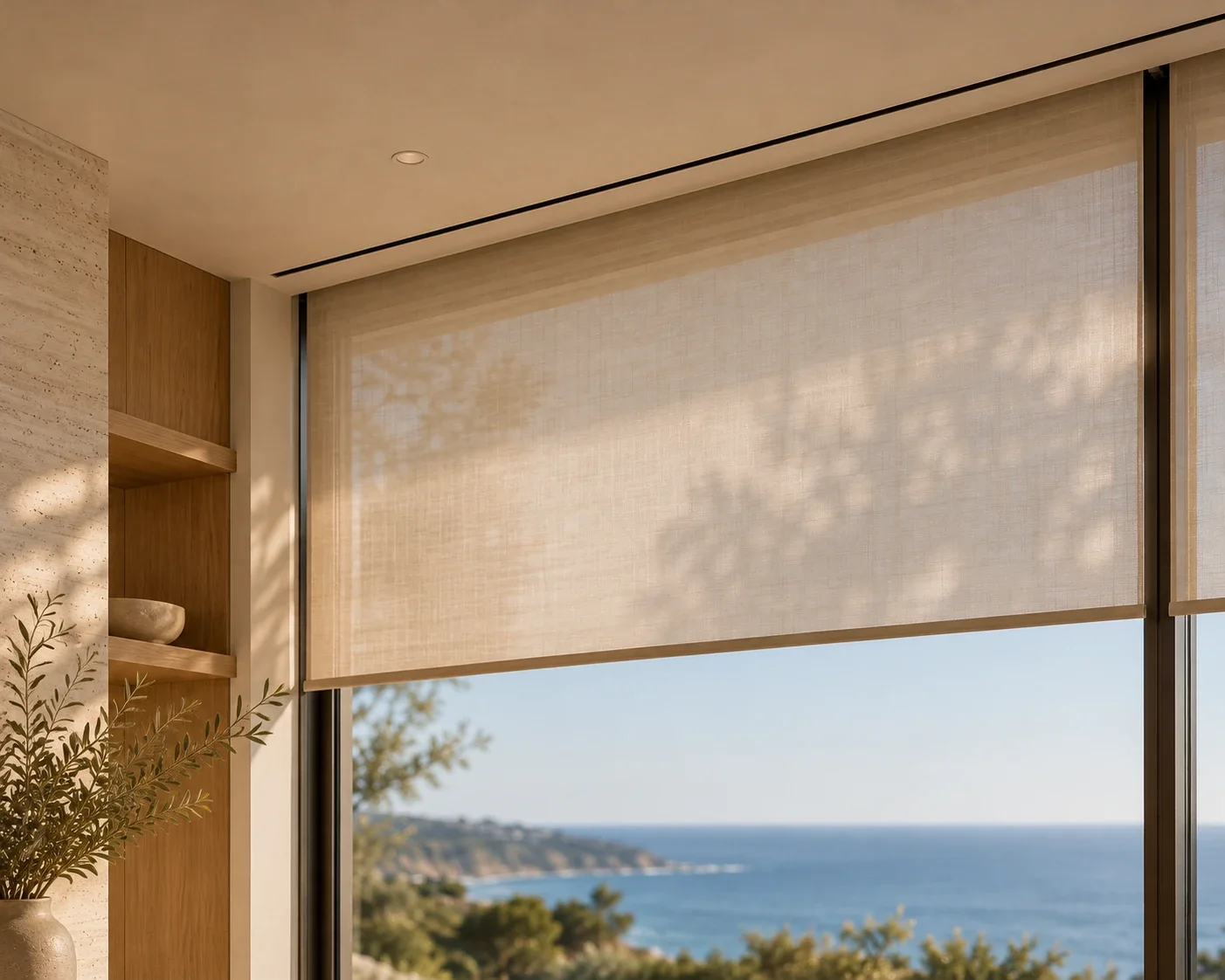
Sheers that soften glare and keep the view, linen for warmth and blackout for the bedrooms. Samples are hung in the actual windows before anything is ordered.
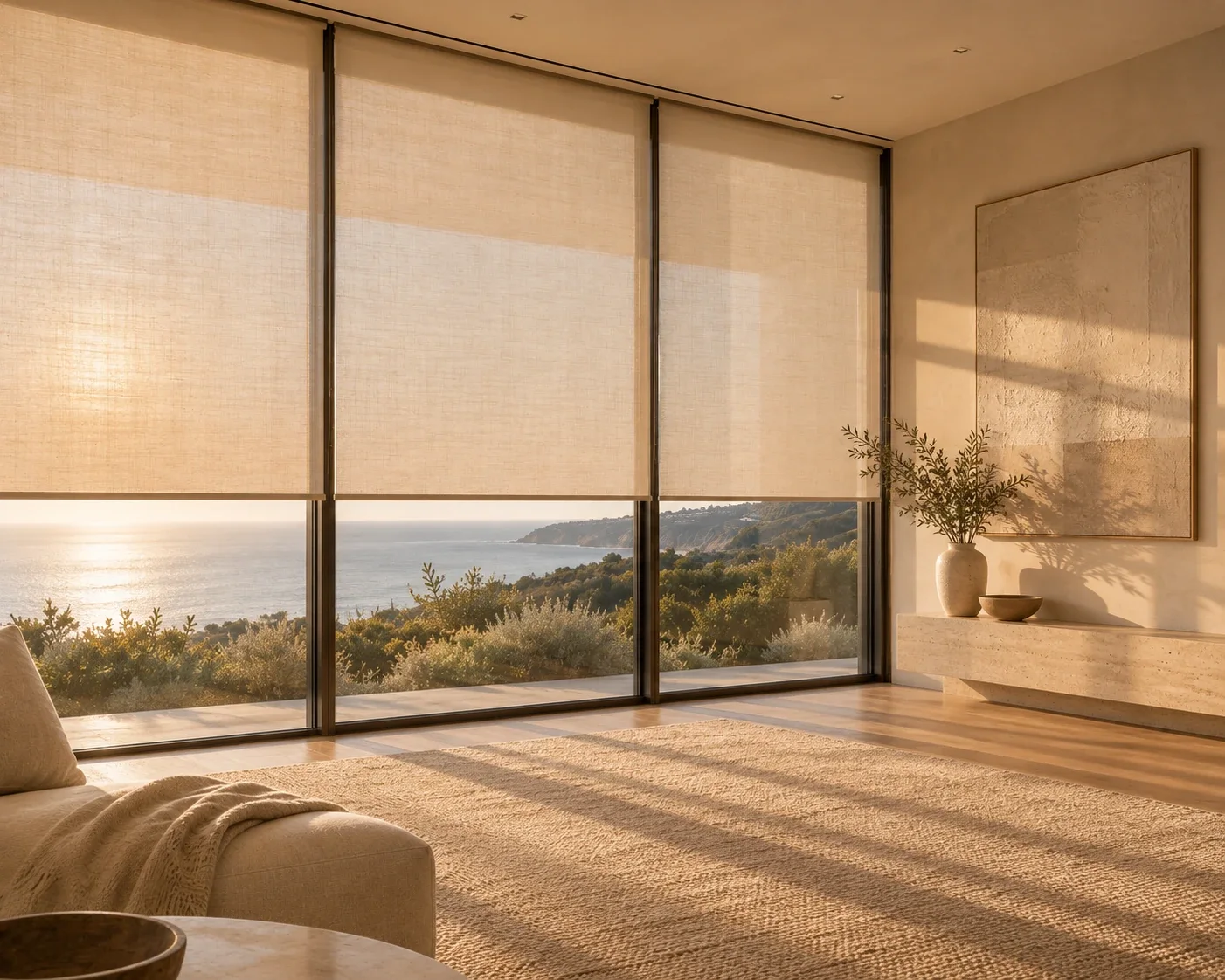
Each side of the house knows where the sun is. Shades lower as it reaches a window and lift once it has passed, protecting floors and art through the day.
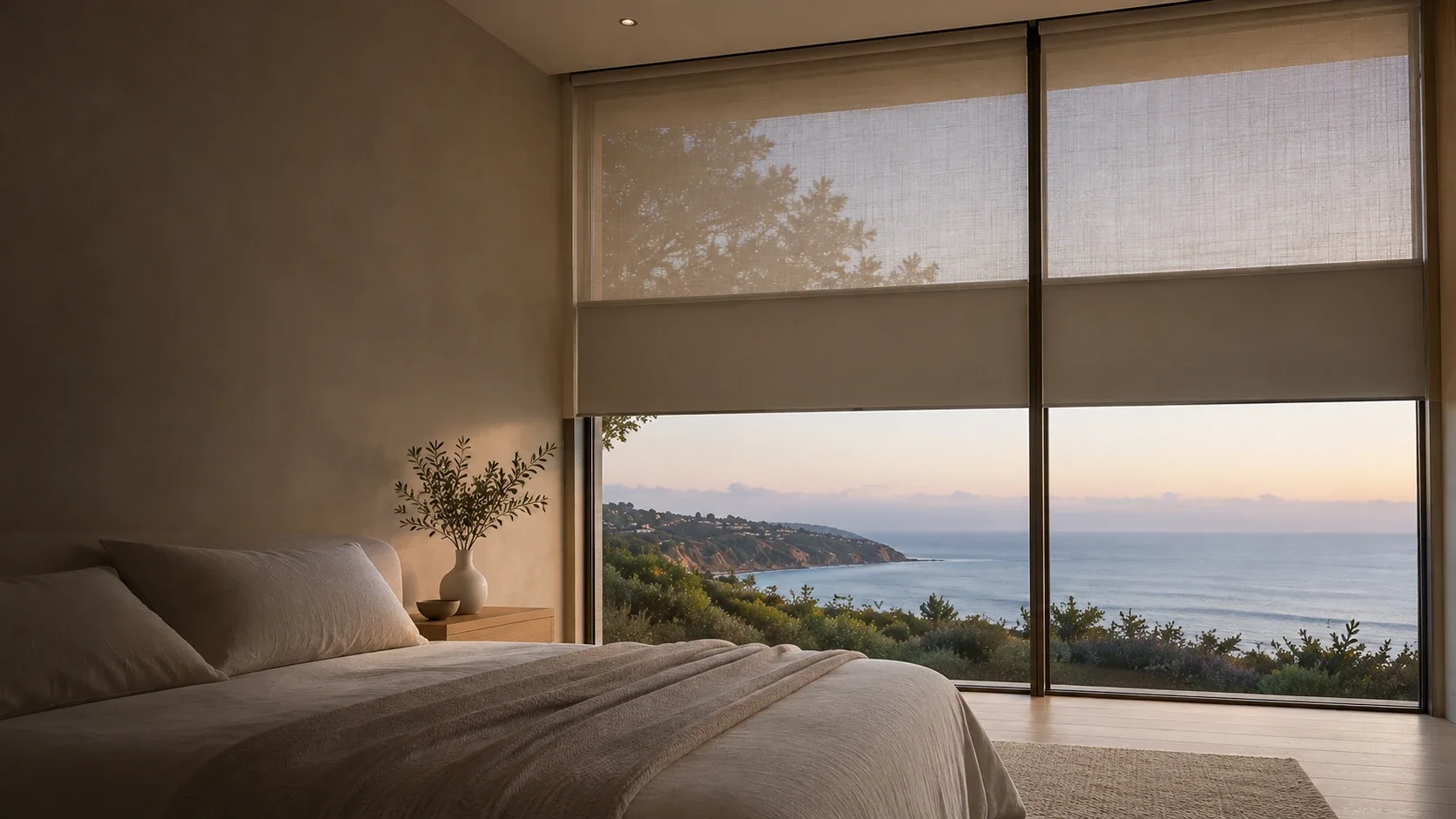
The bedroom blackout rises slowly behind the sheers at the time you chose, so the room fills with light gradually rather than all at once.
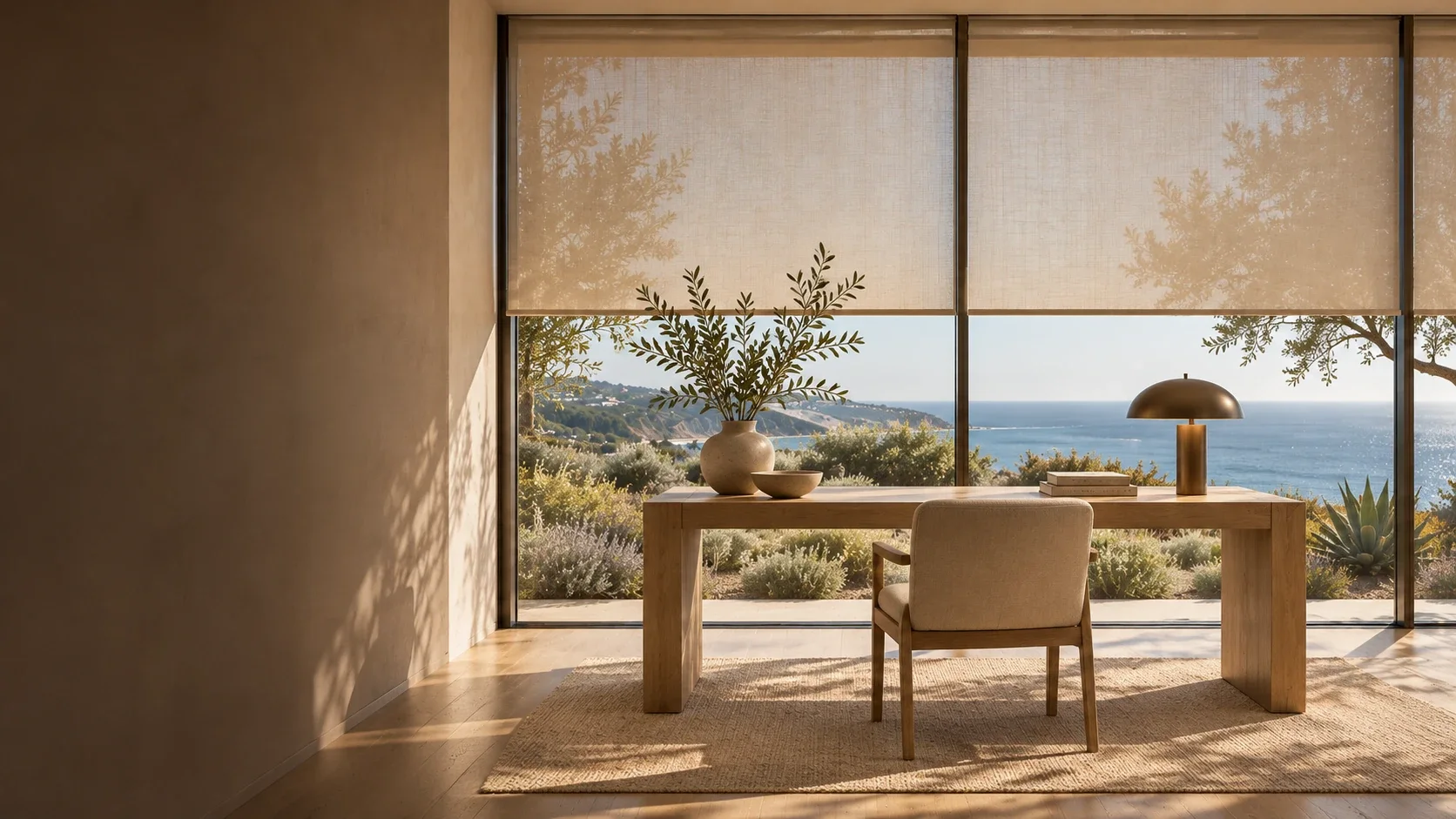
As the sun comes round to the study, the sheers drop just far enough to take the glare off the screen and keep the garden in view.
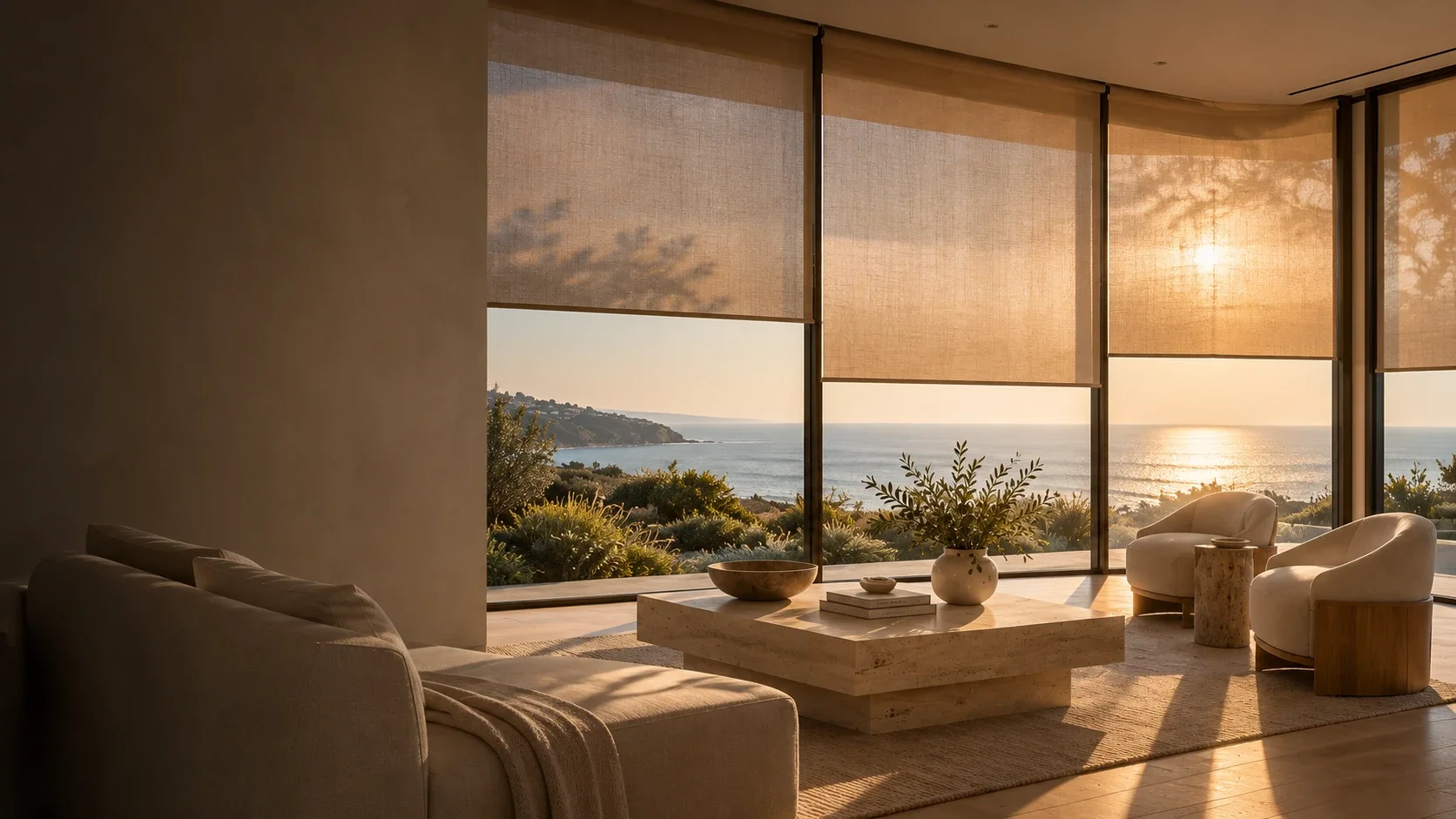
Shades on the west glass lower in stages as the heat builds, so the living room stays bright and the rugs keep their colour.
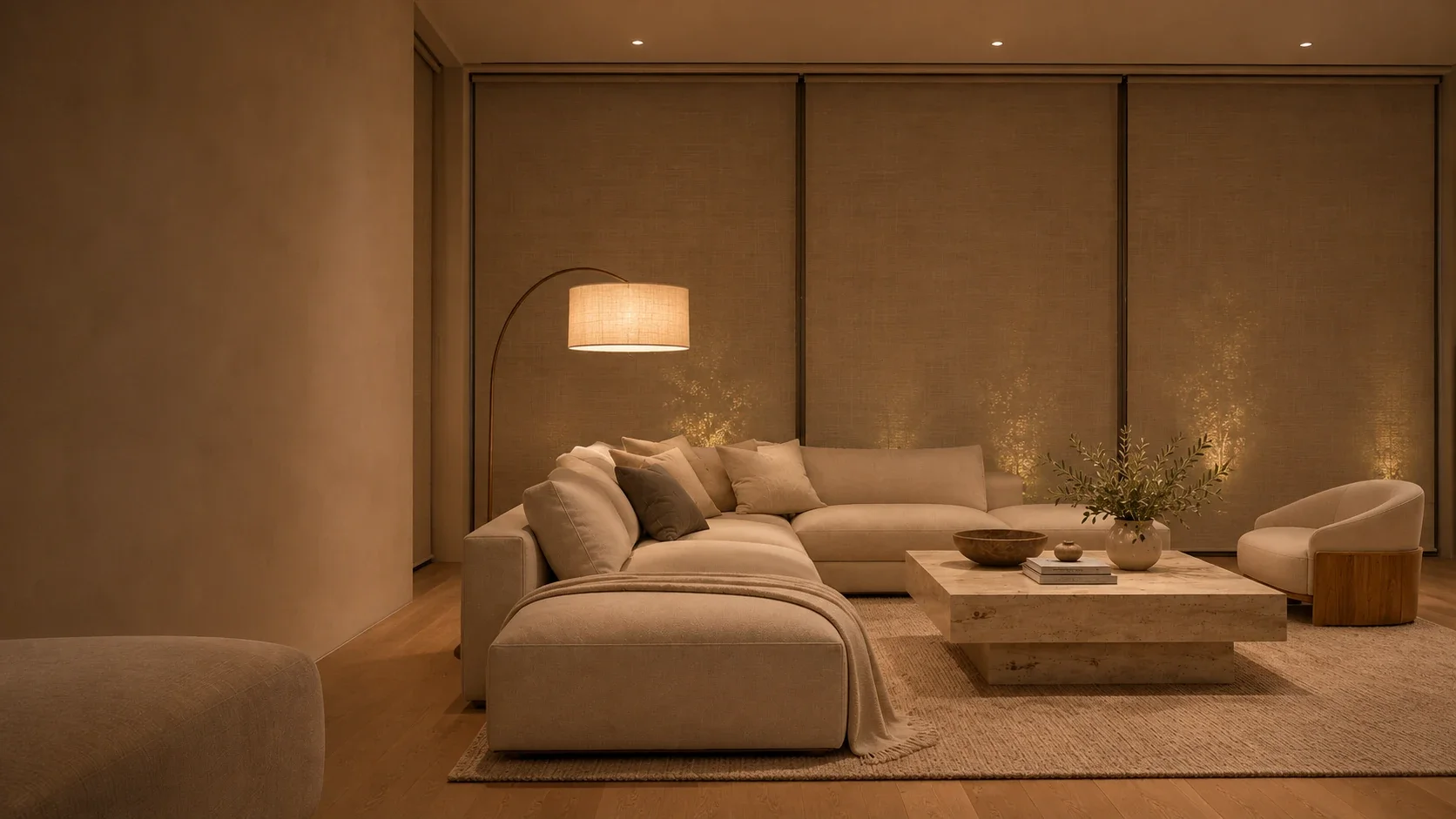
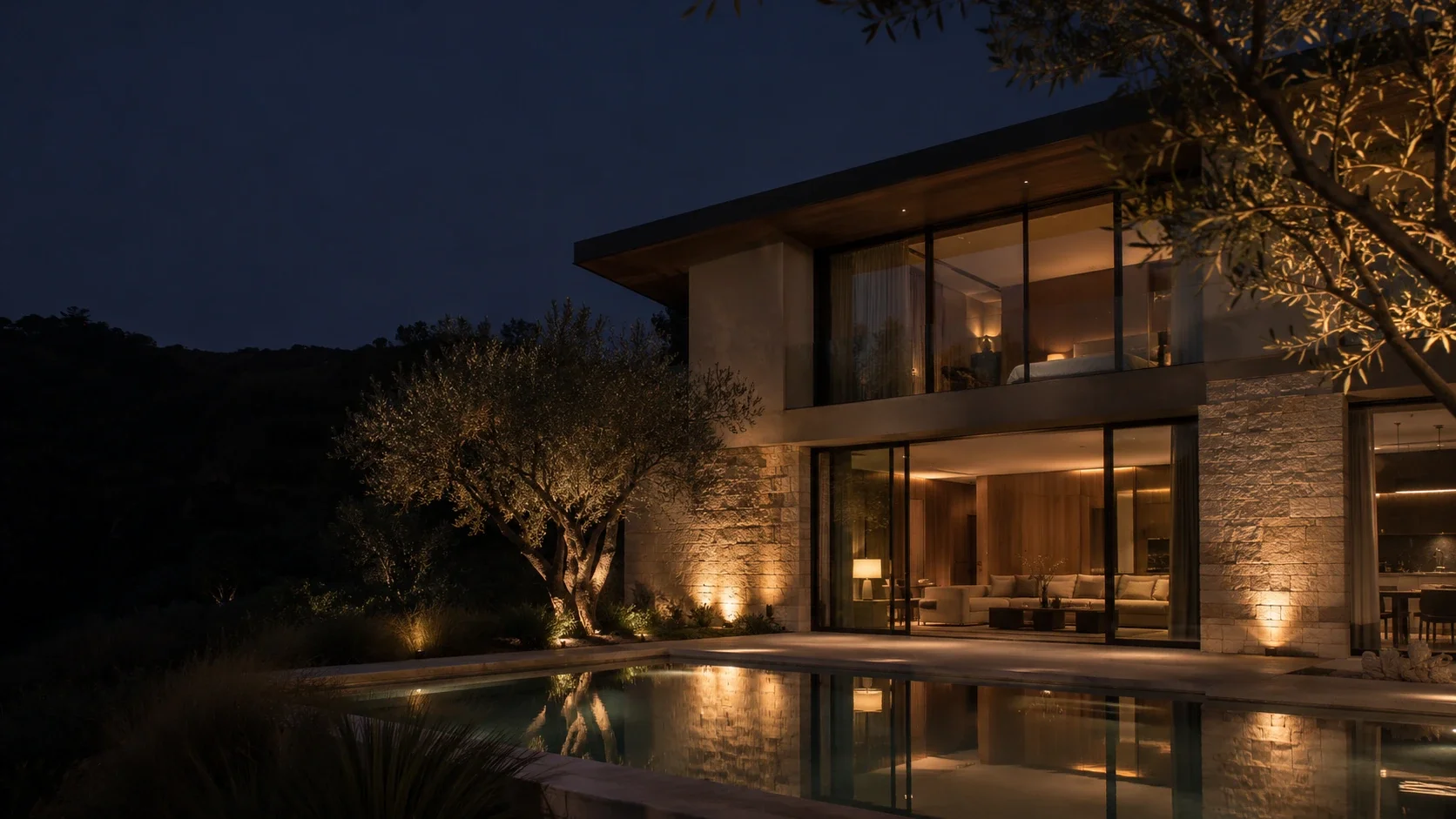
One goodnight press and every shade in the house draws down together, quietly, leaving the rooms private and warm.
The ones we hear most in a first meeting. If yours is not here, ask us.
Ask us something elseUsually. Where ceiling pockets are not possible we use slim headboxes finished to match the room, and battery motors where there is no cabling.
Very. The motors we use are quieter than normal conversation, and every shade in a room moves together, so there is no stagger and no clatter.
It depends on the room. We bring sheer, linen and blackout samples, hang them in the real windows and look at them with you at different times of day.
Only when it helps. Any shade can be overridden with a press, and the house simply picks up its routine again the next day.
Yes. A wind sensor raises them automatically when gusts pass a safe level, and they come back down once it calms.
Send the plans, or invite us round on a bright afternoon. We will show you which windows need shading, what we would use, and how it would look closed.
Let's TalkEvery service is planned to work with the others, so you can start with one and add the rest when you are ready.